
How to Get Court Records
Begin with what the record is for. The free North Carolina eCourts Portal can display an eligible Pender County Case Summary along with public documents. Those appear once processing finishes. Not everything shows up there, though. A Pender County court record may be missing online, need certification, or sit in an older paper file. That record belongs with the Pender County Clerk of Superior Court. The Pender court location page and the statewide records instructions confirm another option: public terminals at the Pender clerk office let you search criminal, civil, special-proceeding, and estate information on the spot. So check the Portal, but do not assume it is the whole story.
- Find the case number, party name, document title, date, and whether a plain or certified copy is needed.
- Use Portal Smart Search for an eligible public Case Summary, then note the exact item or event.
- Use a Pender Clerk public terminal or counter if a web document is missing, historic, or restricted online.
- Call the Clerk at (910) 663-3900 to ask about the correct local copy or certification procedure and any estimate.
- Use the Judicial Branch public-record request route only for existing NCAOC-held records, not as a substitute for a Pender case-file request.
North Carolina’s court-record access instructions describe Portal, clerk terminals, paper files, copies, and transcripts.
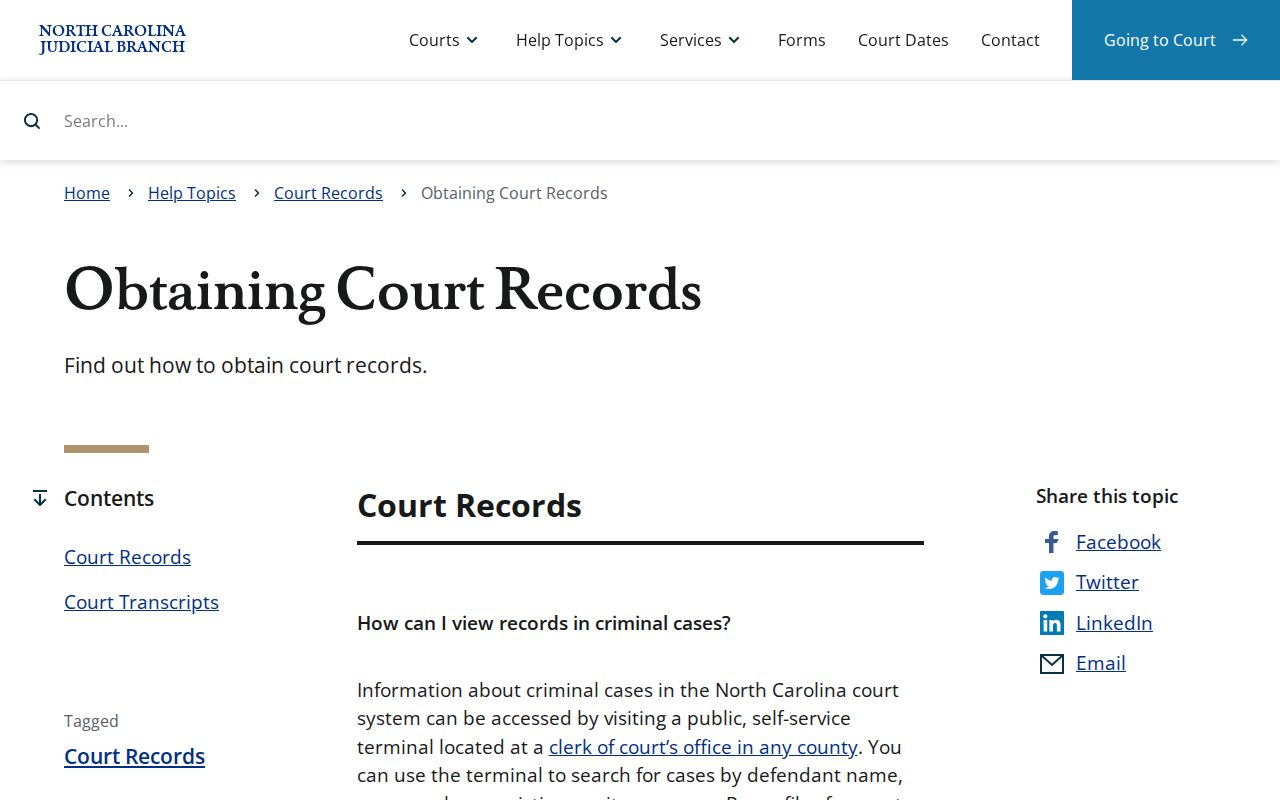
The Portal is one channel, not the only one. When its view of a case feels thin, a paper file at the courthouse or a clerk-office terminal still matters for a Pender County court-record search.
Pender Court Record Custodian
One elected Clerk of Superior Court holds the records for both Pender courts. That covers Superior Court and District Court alike. The same Pender office keeps felony, misdemeanor, and traffic files, plus civil, family, small-claims, estate, special-proceeding, and probate matters. Nothing gets split off. A Pender District Court traffic or small-claims case stays right there, even though it never touched Superior Court.
Pender County Clerk of Superior Court
Pender County Courthouse
100 S. Wright Street
Burgaw, NC 28425
(910) 663-3900
The clerk is the local court-file custodian and the right contact for copies, certification, paper-file access, and county case-record questions.
State public-record policy draws a line between NCAOC records and documents held in a local case file. That distinction keeps a Pender County court-record request pointed at the office maintaining the file. For extra office-level guidance, the Pender Clerk's local site offers another official county source.
Types of Court Records
Know what you are asking for, because Pender County court records come in several forms. A Case Summary or Register of Actions is the public chronology of a case. It lists events, hearings, dispositions, and any financial information made available. Filed documents are the pleadings, motions, orders, judgments, and other images tied to those Pender events. A certified copy is a clerk-certified version of one identified document or record.
Transcripts sit in their own category. A court reporter types one from the hearing. Or a qualified transcriptionist prepares it from a recording. State records guidance says transcripts are prepared on request. Payment usually goes to the reporter or transcriptionist rather than as a simple clerk-copy fee.
Pender Court Records and County Requests
Do not confuse the two request systems in Pender County. The county's NextRequest setup handles county-government records through an executive agency. It is the wrong door for a judicial case file, docket sheet, judgment, or court certification. Those belong to the Pender Clerk. The Judicial Branch public-record request page serves a different purpose as well. It covers existing records held by NCAOC. It does not require an agency to build a new compilation. An ordinary Pender case-file request stays with the Clerk. A state-level route exists, but it serves a separate custodian.
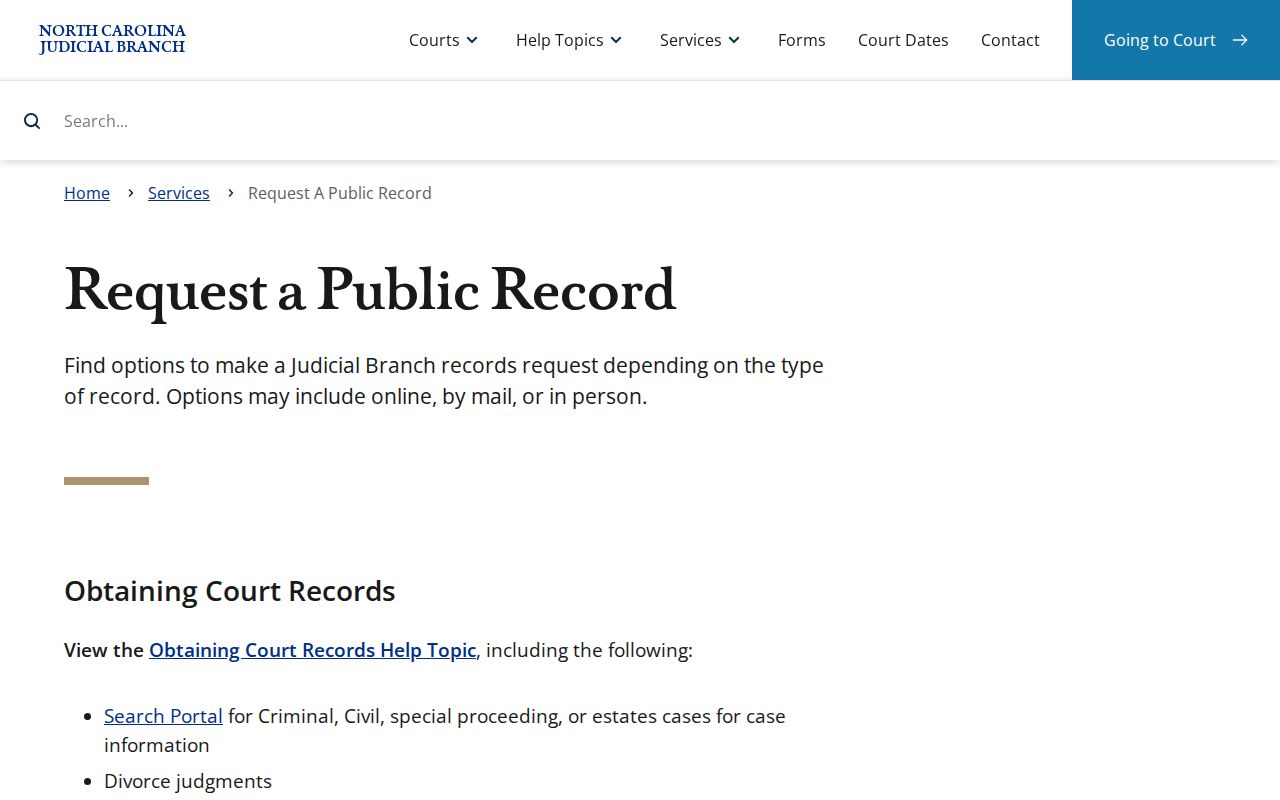
Pick the right custodian before you send anything, and your Pender County court-record request avoids delay or misdirection. County executive records and the court's own files are two separate tracks.
What a Court Record Contains
What a Pender record contains varies. It depends on the record type and the access rules that apply. The Portal describes the Case Summary field by field. It does not promise that every Pender County file displays every category. Behind the public summary, the clerk-held Pender case file may hold more documents. Confidentiality rules or a court order can limit that access.
| Case Summary | Available case information, assignment information, parties, Case Events, hearings, dispositions, and financial information when applicable. |
|---|---|
| Filed document | An eligible public pleading, motion, order, judgment, or other document image, downloaded individually when available. |
| Case Event | A filing, court action, or administrative event in the Case Summary timeline. |
| Certified copy | A local Clerk-certified copy of an identified case document, judgment, or docket record. |
| Transcript | A separately requested hearing record, not an ordinary Portal image or clerk file copy. |
Read each category correctly and your Pender County request stays precise. A public timeline, a document image, a certified copy, and a hearing transcript each carry different limits and answer to a different custodian.
Pender Court Record Online Limits
Pender Portal access helps, but it does not promise complete documents. Public Pender documents appear only after upload to Enterprise Justice and processing, and each image must be downloaded one at a time. Large files can throw an error. Portal materials identify it as 141011, and fixing it may require clerk reprocessing. For the wider rules on inspection, copies, redaction, and service-fee boundaries, the Judicial Branch explanation of North Carolina public-record access lays them out.
When a public Pender County image will not open, is historical paper, or needs a stamped copy, go straight to the Pender Clerk. Another web search will not get you closer.
Certified Copies and Fees
North Carolina's clerk-fee statute sets the Pender copy and certification amounts listed here. A Pender total hinges on the document itself. It also depends on the page count and how the clerk handles the work. So the final bill can shift from one request to the next. Ask the clerk to confirm the fee before you mail anything.
Pender offers no general online order form for certified copies. Nor does the clerk publish a turnaround promise. Call ahead to confirm the process and any timing before you rely on an estimate.
| Pender court-record service | Fee | Source note |
|---|---|---|
| First page of each copied document | $2.00 | G.S. 7A-308(a)(12). |
| Each additional copied page | $0.25 | G.S. 7A-308(a)(12). |
| Certificate under seal | $3.00 | G.S. 7A-308(a)(9), potentially in addition to copying. |
| Exemplification of records | $10.00 | Formal record authentication under G.S. 7A-308(a)(10). |
A plain copy and a certified copy are not the same thing in Pender. Ask the Pender Clerk for the total amount and the required certification before treating any fee row as the finished cost.
Pender Certified Court Record Requests
To request a certified Pender County record, gather the details first. Bring the case number and party names. Note the document or docket you want, the date if known, and how many copies. State plainly that you need certification. The Pender Clerk can tell you about the fees. Ask whether the certificate-under-seal fee and the copy charge both apply to your item. NCAOC's published policies and procedures put it clearly. The county clerk is the custodian of case documents, and NCAOC cannot certify them.
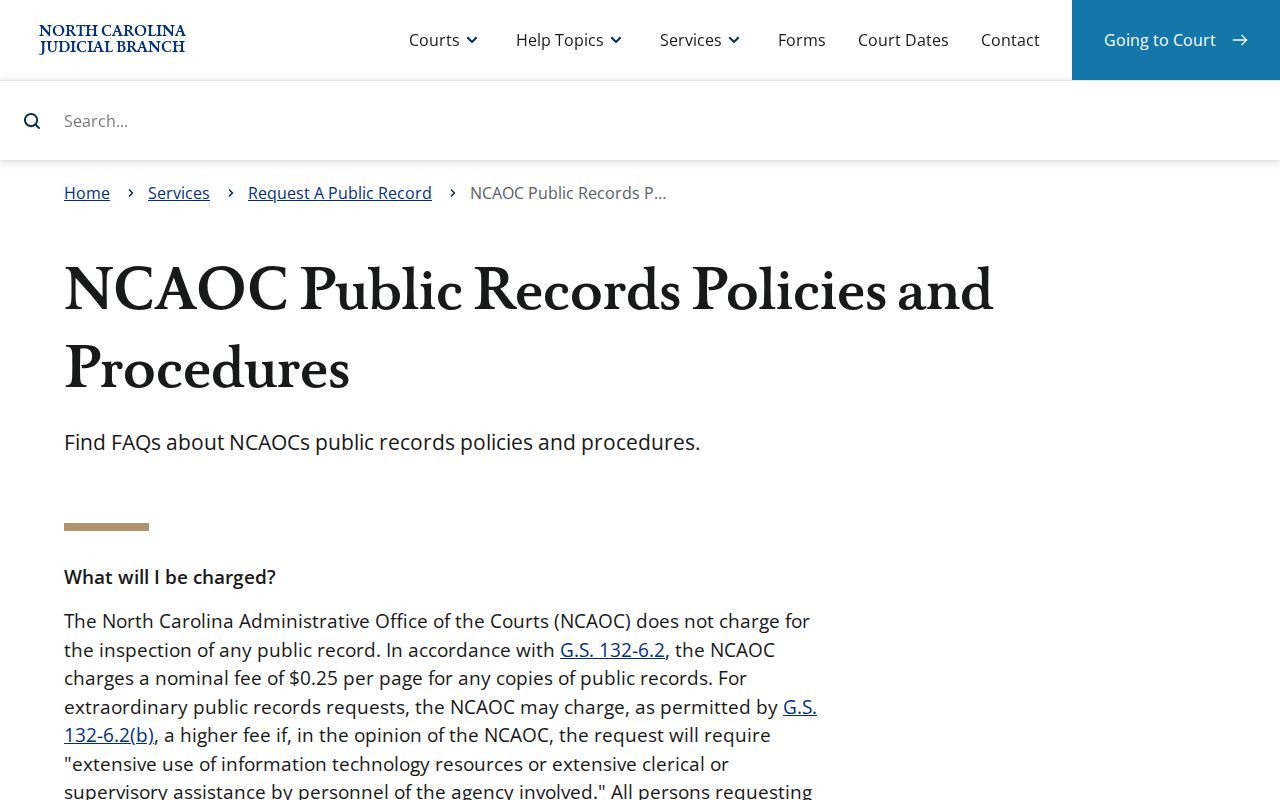
A PDF pulled from the Portal works fine for reading. It carries no clerk's certification, though. When a Portal search turns up the document you need, that is the moment to go through the local Pender clerk for a certified copy.
Public Access and Sealed Records
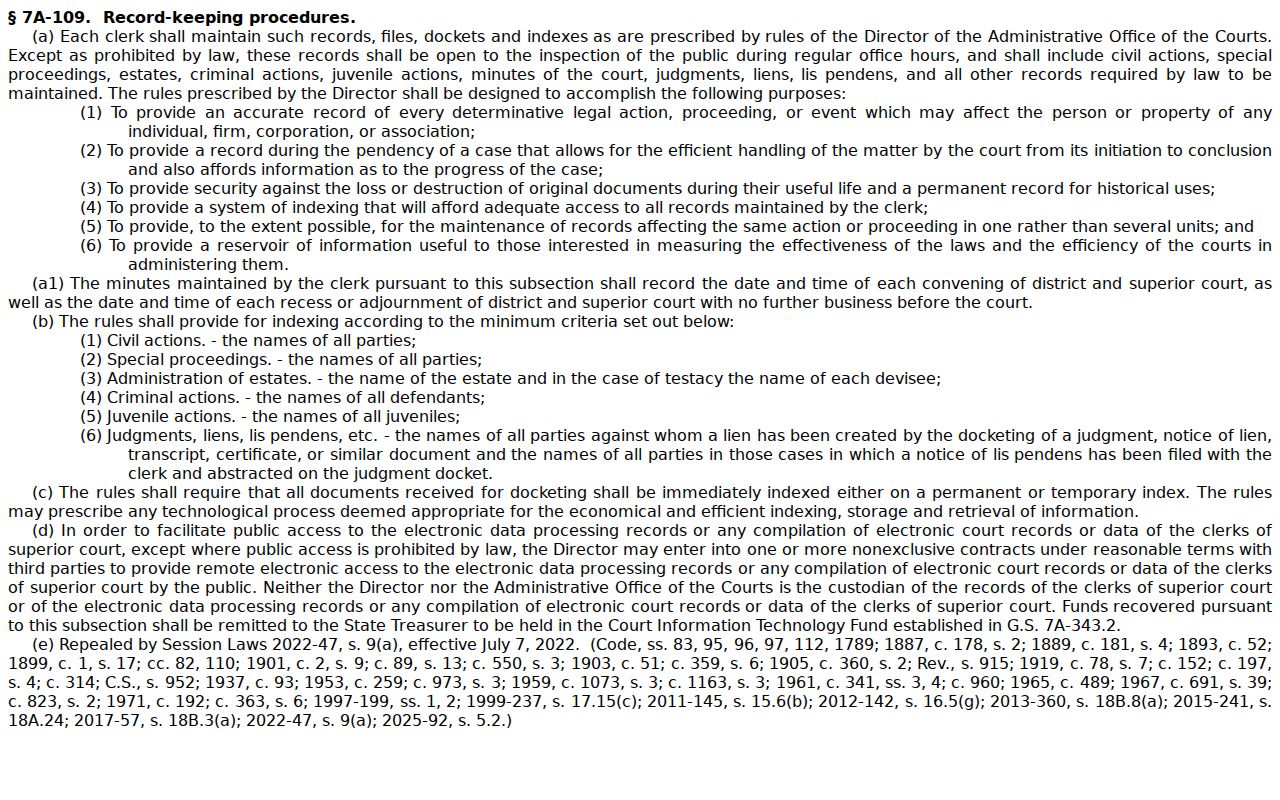
Most Pender judicial records that qualify are open to inspection during the clerk's regular office hours. Access has limits. The framework the Clerk works under comes from G.S. 7A-109, and confidentiality statutes plus court orders govern anything protected.
North Carolina access limits: G.S. 132-1 broadly defines public records, while G.S. 132-6.2 addresses inspection and copy-service boundaries. Juvenile records are withheld from public inspection under G.S. 7B-3000, and expunction information has confidential-file rules under G.S. 15A-151.
Registering for the Portal does not unlock sealed or confidential cases and documents. Domestic-violence records face special online limits of their own. A terminal at the courthouse is not a workaround either. Protected contents stay protected there too. The clerk-record statute sets out the official inspection framework for Pender court records.
The practical Pender rule is simple. Ask the Clerk about the lawful access path for any protected or missing record, but do not expect a public docket search to reveal it.
Pender Court Record History
Pender joined eCourts on February 3, 2025. That switch did not scan every old paper filing into an online image. Portal materials acknowledge that historical paper files can still sit with the Clerk. Pender's own criminal guidance notes another limit. The electronic criminal index covers July 1989 forward. Older work may take AOC microfilm or index books.
Hunting an older Pender court record? Give the Clerk the case type and the approximate year. Add a party or case number, plus the document you want. Ask which archive or index applies. Ask whether staff need to prepare an estimate. One more thing worth remembering. A missing Portal record is not proof that the local file was destroyed.
Pender Court Record Transcripts
A transcript is not a docket entry. It is not a copy of a filed order. It is the typed record of what was said at a hearing. A court reporter or qualified transcriptionist prepares it. Start with Pender Clerk or court staff. Identify the case and the hearing date. Then ask which reporter or recording channel handles it.
Pender posts no set transcript price, form, or turnaround. That gap matters. Request-specific details should come from the court or clerk rather than an assumed flat fee. So ask before you budget the copy.
Pender Court Record Request Scope
A precise request is easier for the Pender Clerk to process. Lead with the case number when you have it. Then add the division and the date range. Include the document title or event, the copy type you want, and the page or copy count if known. For a broad paper-file request, ask for a fee estimate first.
Looking at eligible records may cost nothing. Copies and extraordinary clerical work can carry authorized charges. A public-record request also cannot force the office to build a new report or compilation. That is one more reason to name the actual Pender court document, docket, judgment, or transcript rather than a vague "full record."
Pender Court Record Index Limits
The Clerk's local criminal-record search covers the county only. Its $25 fee buys a county search, not a statewide one. The result is not a certified judgment, a full case file, or a Portal Case Summary. The route runs in person through Criminal Division Room 8. By mail, send a full name.
Historic limits still apply. The electronic criminal index starts in July 1989. Earlier material can require microfilm or index-book work plus extra time. For a specific Pender court document, identify the case. Ask for the actual record instead of assuming the county index holds every filing.
Note: Court records are public-reference materials for a known matter, court date, or historical question. Always verify them with the Pender Clerk.